Table of Contents
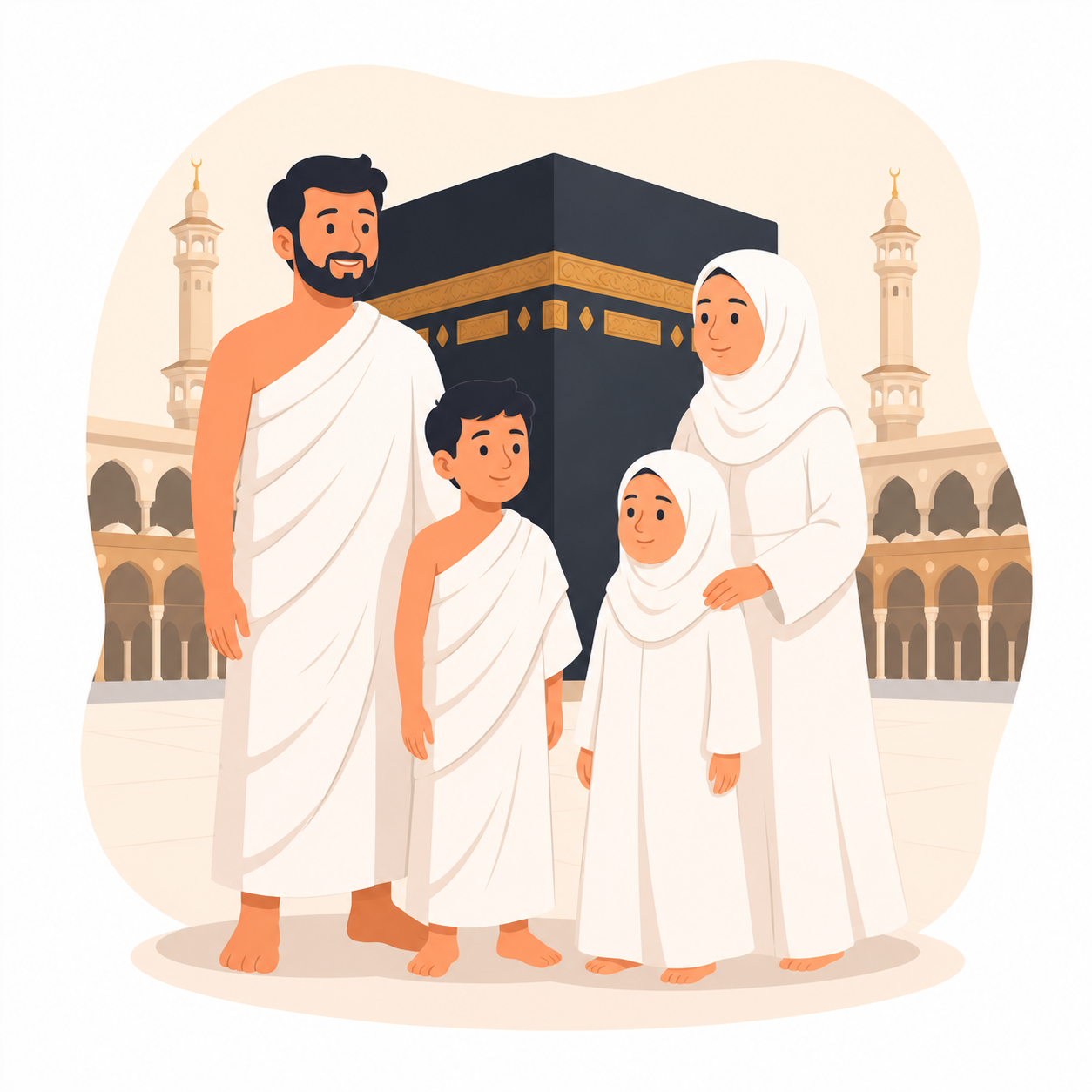
Should You Take Children to Hajj?
This is one of the most meaningful questions a Muslim parent can ask. Hajj is the journey of a lifetime — and sharing it with your children is a gift that will mark them spiritually for the rest of their lives. The Prophet Muhammad ﷺ himself saw a woman holding up her baby during Hajj and said: "Yes, and you will receive a reward." (Muslim). Children's Hajj counts as a valid pilgrimage, though it does not fulfil the adult obligation.
The question is not whether children should experience Hajj — the sunnah is clear that they can and should — but whether your specific child, at their current age and temperament, can handle the physical and logistical demands of the journey. Hajj with a six-year-old is a fundamentally different experience from Hajj with a twelve-year-old.
The Right Age for Children to Perform Hajj
There is no minimum age — infants have performed Hajj with their parents. But practically speaking, most scholars and experienced Hajj guides recommend waiting until children are at least 8–10 years old, for several reasons:
- Physical endurance — Hajj involves extraordinary walking, standing, and heat. Young children tire quickly and may become distressed.
- Understanding — a child who understands why they are at Arafat, what Tawaf represents, who Ibrahim alayhis-salaam was, will receive far more from the experience than one who is simply present.
- Safety in crowds — the crowds at Hajj are among the largest and densest on earth. A child who cannot follow instructions or stay close is a safety concern.
- Memory — children under 7–8 often do not retain clear memories of experiences. The spiritual impact of Hajj is greatest when it is understood and remembered.
Preparing Your Child Before Hajj
Teach the Story of Ibrahim and Ismail
Every ritual of Hajj connects to the story of Ibrahim alayhis-salaam. Before leaving, ensure your child knows: who Ibrahim was and his unwavering faith in Allah; the story of Hajar and the miracle of Zamzam; the trial of the sacrifice and what it teaches about tawakkul; the building of the Kaaba.
Explain Each Ritual Before You Perform It
Do not let Hajj be a mystery to your child. In the weeks before travel, explain Tawaf ("we will walk around the Kaaba seven times, just as the angels circle the Throne of Allah"), Sa'i ("we will walk between Safa and Marwa, remembering Hajar's trust in Allah"), and the standing at Arafat ("this is the most important moment of Hajj — we will raise our hands and ask Allah for everything").
Physical Preparation
Walk regularly with your child in the months before Hajj — build their stamina gradually. Ensure they have comfortable, well-broken-in footwear. Discuss the heat and how to manage it. Practice making du'a together — they should have a list of personal du'as ready for Arafat.
Practical Logistics for Families
- Choose a family-friendly Hajj package — not all packages are equal. Look specifically for providers who accommodate families with children, with hotels close to the Haram and comfortable transport.
- Identification and wristbands — in the immense Hajj crowds, every child must carry identification at all times. Many families use wristbands with emergency contact numbers. Establish a clear meeting point in case of separation.
- Packing for children — light, breathable clothing; comfortable closed shoes; sun protection; a small backpack for each child with water, snacks, and their ID. Medications for common ailments (headaches, stomach issues, fatigue).
- Managing Ihram for boys — boys in Ihram wear the same two white sheets as men. Practice wearing and adjusting the Ihram before leaving the UK so your son is comfortable.
- Hydration is critical — children dehydrate faster than adults in Makkah's heat. Regular water breaks are not optional.
Making Hajj Meaningful for Your Children
The logistics of Hajj can consume all your energy, leaving little time for spiritual depth. Resist this. The greatest gift you can give your child at Hajj is the experience of genuine connection with Allah — not just the completion of rituals.
- Stand at Arafat together — hold your child's hand and make du'a together. Let them hear you cry. Let them see what it looks like to humble yourself before Allah completely.
- Drink Zamzam together — tell the story of Hajar as you drink. Make du'a as you drink, as the Prophet ﷺ instructed.
- Give them their own du'a list — ask your child in the weeks before Hajj: "What would you like to ask Allah for?" Write it down. At Arafat, remind them.
- Talk about what you experienced each evening — "What did you feel during Tawaf?" "What did you ask Allah for today?" Reflection deepens experience.
- Keep a Hajj journal or photo diary — a child who documents their Hajj has something to return to for the rest of their life.
Frequently Asked Questions
No — this is an important point. The Prophet ﷺ was asked about a child performing Hajj and he confirmed the child receives the reward, but they must perform Hajj again after reaching adulthood. Performing Hajj as a child is spiritually valuable but does not fulfil the adult obligation. (Muslim)
Boys wear the same unsewn white sheets as men. Girls and women wear modest clothing — usually white — that covers the entire body except the face and hands. Unlike men, women do not have specific garments prescribed for Ihram and can wear their normal modest Islamic clothing in plain colours.
Yes, with planning. Many physically disabled pilgrims perform Hajj using wheelchairs, and the Saudi authorities have made significant provisions. Speak to your Hajj operator specifically about disability accommodation — the best operators have dedicated support for pilgrims with mobility needs. Certain rituals can be performed by proxy if necessary — consult a scholar for your specific situation.
A structured Islamic Studies programme in the 6–12 months before Hajj is ideal. Children should understand the five pillars, the story of Ibrahim, the significance of the Kaaba, and the meaning of each ritual. Moddaker Academy's Islamic Studies sessions can be structured specifically around Hajj preparation — contact us to discuss a custom learning plan.

Start Your Quran Journey with a Free Trial Lesson
Join hundreds of Muslim families across the UK learning with certified Al-Azhar scholars — one-on-one, online, at your pace.