Table of Contents
Where Did the Five Daily Prayers Come From?
The five daily prayers were not prescribed gradually — they were given to the Prophet Muhammad ﷺ on a single, extraordinary night. During the Isra' wal Mi'raj — the miraculous Night Journey and Ascension — the Prophet ﷺ was taken from Makkah to Jerusalem, then raised through the heavens, until he reached a proximity to Allah that no created being has ever reached.
It was in this presence that Allah prescribed fifty prayers per day. As the Prophet ﷺ descended, he met Prophet Musa alayhis-salaam, who asked how many prayers had been prescribed. When told fifty, Musa said: "Go back to your Lord and ask for a reduction — your ummah cannot bear fifty prayers." The Prophet ﷺ returned to Allah repeatedly, each time the obligation was reduced by ten, until it reached five. Then Allah said: "These are five prayers, and they are [equivalent to] fifty in reward." (Bukhari)
This origin matters profoundly. Five prayers is not an arbitrary number — it is the result of divine mercy responding to the real limitations of human beings, while preserving the full reward of fifty. Every Muslim who prays their five daily prayers has the reward of fifty.
Why Five Times Specifically? The Rhythm of the Day
The five prayers are not bunched together — they are spread across the entire day in a way that creates a natural spiritual rhythm:
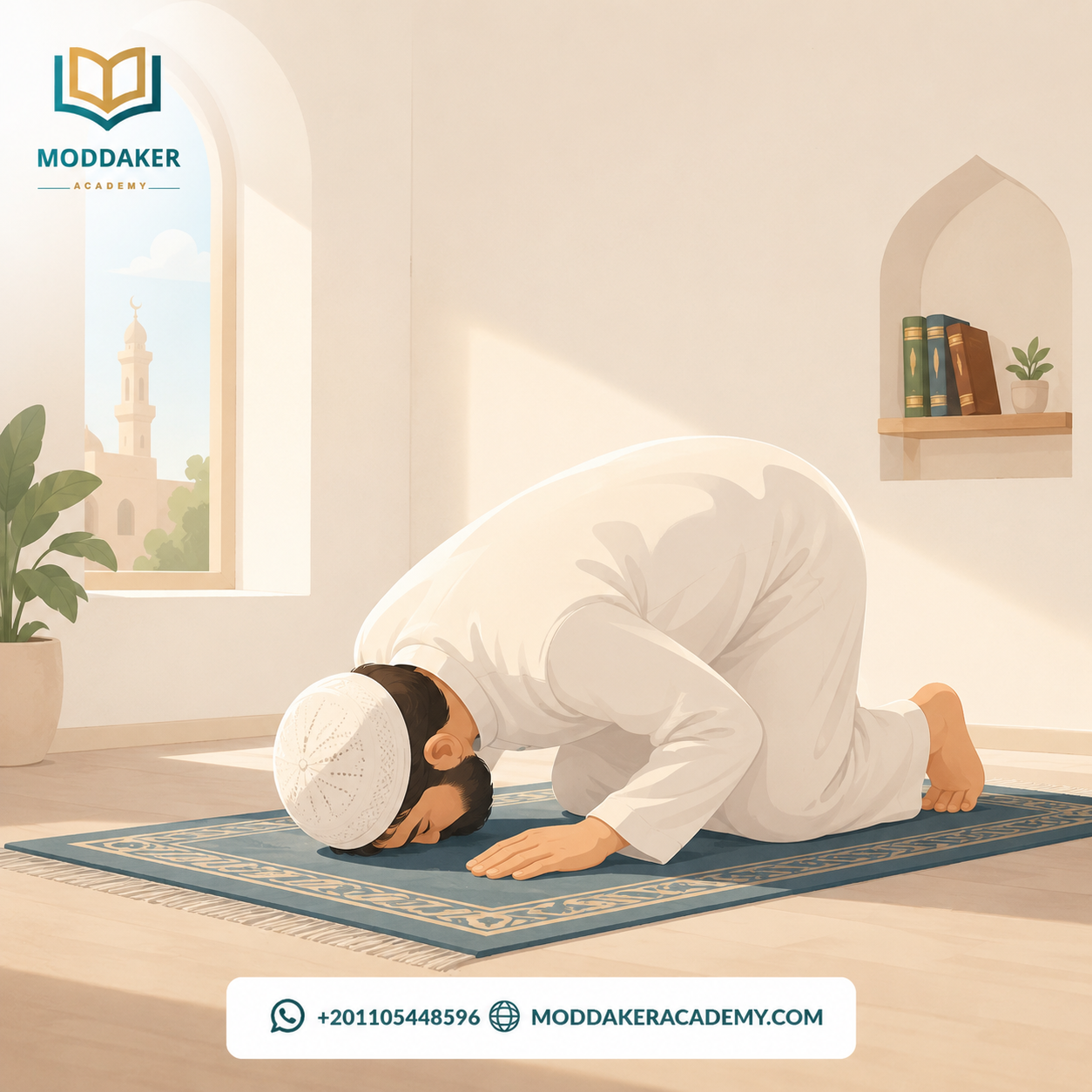
- Fajr (Dawn) — the day begins with Allah. Before the world wakes, before the phone is checked, before the demands of work begin, the Muslim stands before their Creator. Fajr establishes who the day belongs to.
- Dhuhr (Midday) — at the peak of the working day, when the world is at its most distracting, the Muslim pauses. A reminder that worldly productivity is not the purpose of existence.
- Asr (Afternoon) — as energy begins to fade and the day edges toward its end, Asr brings another spiritual pause. The Prophet ﷺ particularly emphasised Asr: "Whoever misses the Asr prayer, it is as if he has lost his family and his wealth." (Bukhari)
- Maghrib (Sunset) — the day closes with Allah. Three rak'ahs that bookend the working hours and transition into the evening.
- Isha (Night) — before sleep, a final meeting with Allah. The Muslim ends the day in prayer, and if they die in the night, they die having just spoken to their Creator.
This is not random scheduling. It is a divinely designed structure that ensures no segment of waking life goes for more than a few hours without returning to Allah. The day is punctuated by worship — not consumed by it, but never fully disconnected from it.
What Is the Purpose of Salah? What the Quran Says
Allah states the purpose of Salah explicitly in the Quran:
- "Verily, I am Allah. There is no deity except Me, so worship Me and establish prayer for My remembrance." (Quran 20:14) — Salah is remembrance of Allah.
- "Indeed, prayer prohibits immorality and wrongdoing." (Quran 29:45) — Salah is a moral barrier against sin.
- "And seek help through patience and prayer." (Quran 2:45) — Salah is the solution to difficulty and distress.
A Muslim who prays five times daily and genuinely engages in those prayers — not just physically but with presence of heart — finds that prayer functions as a complete psychological reset. Every worry, failure, and anxiety can be laid before Allah in sujood. Every gratitude can be expressed. Every need can be articulated. Salah is not just religious observance — it is the most direct form of therapy available to the human soul.
Why These Specific Times? The Cosmic Significance
The prayer times are not arbitrary — they correspond to significant moments in the movement of the sun, which itself is a creation of Allah that testifies to His greatness:
- Fajr is prayed as the first light appears at the eastern horizon — the moment creation awakens.
- Dhuhr begins as the sun passes its zenith — the peak of day.
- Asr is in the afternoon as shadows lengthen — the turning of the day.
- Maghrib is immediately after the sun disappears below the horizon — the end of daylight.
- Isha begins when the red twilight fades completely — the arrival of full night.
The angels of day and night change shifts at Fajr and Asr — which is why the Prophet ﷺ said these two prayers carry particular weight. The Muslim who prays them joins the witnessing of the angels at these cosmic transitions.
Answering the Question for Non-Muslims and Sceptical Children
British Muslim families — especially parents raising children in UK schools — will often encounter this question from teachers, friends, or their own curious children: "Why do you have to pray five times a day? Isn't once enough?"
Here is a clear, honest answer: Because the relationship with Allah that Islam describes requires more than once a week. A person who only speaks to their closest friend once a week is not, in any meaningful sense, close to them. Islam teaches that Allah is closer to a person than their jugular vein (Quran 50:16) — a relationship of that intimacy calls for constant communication, not weekly visits. Five times a day is not excessive for maintaining a living relationship with one's Creator.
Explaining Salah's Wisdom to Your Children
Children who understand why they pray are far more likely to pray willingly than those who are simply told they must. Here are age-appropriate ways to explain the wisdom:
- Ages 5–7: "When we pray, we're talking to Allah. He loves to hear from us, and we love to be near Him."
- Ages 8–11: "Allah made us, loves us, and gives us everything. Salah is how we say thank you — five times a day because we are thankful all day, not just on Sundays."
- Ages 12+: "Think about the most important relationship in your life. How often do you talk to that person? Now — Allah is more important than anyone. Five prayers a day is the minimum for that relationship. It's not a lot when you think about it that way."
Frequently Asked Questions
The Quran commands prayer many times (e.g. 2:43, 4:103, 11:114) but does not enumerate the five prayers explicitly by name. The specification of five prayers, their times, and their rak'ahs comes from the Sunnah — the authentic practice and teaching of the Prophet ﷺ. This is why the Sunnah is the essential complement to the Quran: the Quran commands prayer; the Sunnah shows us how.
In the UK, employees have a legal right to request reasonable prayer time accommodation under equality legislation. Many UK employers and schools now accommodate prayer times, especially as Muslim communities have grown. Practically: take short breaks for Dhuhr and Asr (each prayer takes 5–7 minutes); pray Fajr before leaving home; Maghrib and Isha are in the evening. It is manageable with planning. If you genuinely cannot pray on time due to medical circumstances or genuine emergency, some prayers can be combined — consult a scholar for your specific situation.
A new Muslim or someone still learning Arabic who makes honest effort at correct pronunciation is rewarded for their effort and their prayer is valid. Allah is Al-'Alim — He knows your heart and your intention. However, continuing to improve Arabic pronunciation is an obligation — do not be satisfied with permanent mispronunciation of Allah's words. Moddaker Academy offers Quran pronunciation courses specifically designed for adults who want to pray with confidence and correctness.
Prayer at home is completely valid. The Prophet ﷺ said: "The whole earth has been made a masjid (place of prayer) for me." (Bukhari). While congregational prayer at the mosque carries 27 times the reward of praying alone, home prayer fulfils the obligation fully. Friday (Jumu'ah) prayer must be prayed in congregation at a mosque for men — this is the one obligatory congregational prayer.

Start Your Quran Journey with a Free Trial Lesson
Join hundreds of Muslim families across the UK learning with certified Al-Azhar scholars — one-on-one, online, at your pace.